In Proximity of Sagawa Chika
Chika Sagawa was part of a community of avant-garde Tokyo poets inspired by modernist poetics and aesthetic experimentation. ExploreWhen Sagawa Chika was 17 years old (year), she followed her brother, Kawasaki Noboru, and his best friend, Ito Sei, to Tokyo, where the two were determined to participate in the literary culture of Tokyo.
It was a time of great cultural and structural transformation in Japan, in the midst of a heavily Western-facing modernization, building and rebuilding of infrastructure after a catastrophic earthquake, the emergence of leisurely consumerism as seen in the emergence of the department store, which also housed Japan’s first escalator, change in dress from traditional Japanese to Western style clothing. Even the language itself was thick in the process of modernizing.
During this vibrant time, the more visible aspects of the literary landscape included a mainstream poetry that had adopted a free verse lyric style from Western influences, as well as emergent literatures with social causes, such as the movement towards proletarian literature, feminist literature, all of which benefited from an explosion in print culture. The community of avant-garde poets inspired by modernist poetics and aesthetic experimentation was small, but incredibly prolific. Ito Sei himself, Sagawa’s first mentor, shifted away from poetry and became a writer and translator of prose. It was after Kitasono Katsue encountered Sagawa’s work that led to her quick acceptance into this eclectic, energetic, and aesthetically adventurous group of writers. Kitasono was extremely supportive of Sagawa’s talents [insert quote], but also encouraged a number of women poets in the community, including Ema Shoko, who became a close friend of Sagawa’s.
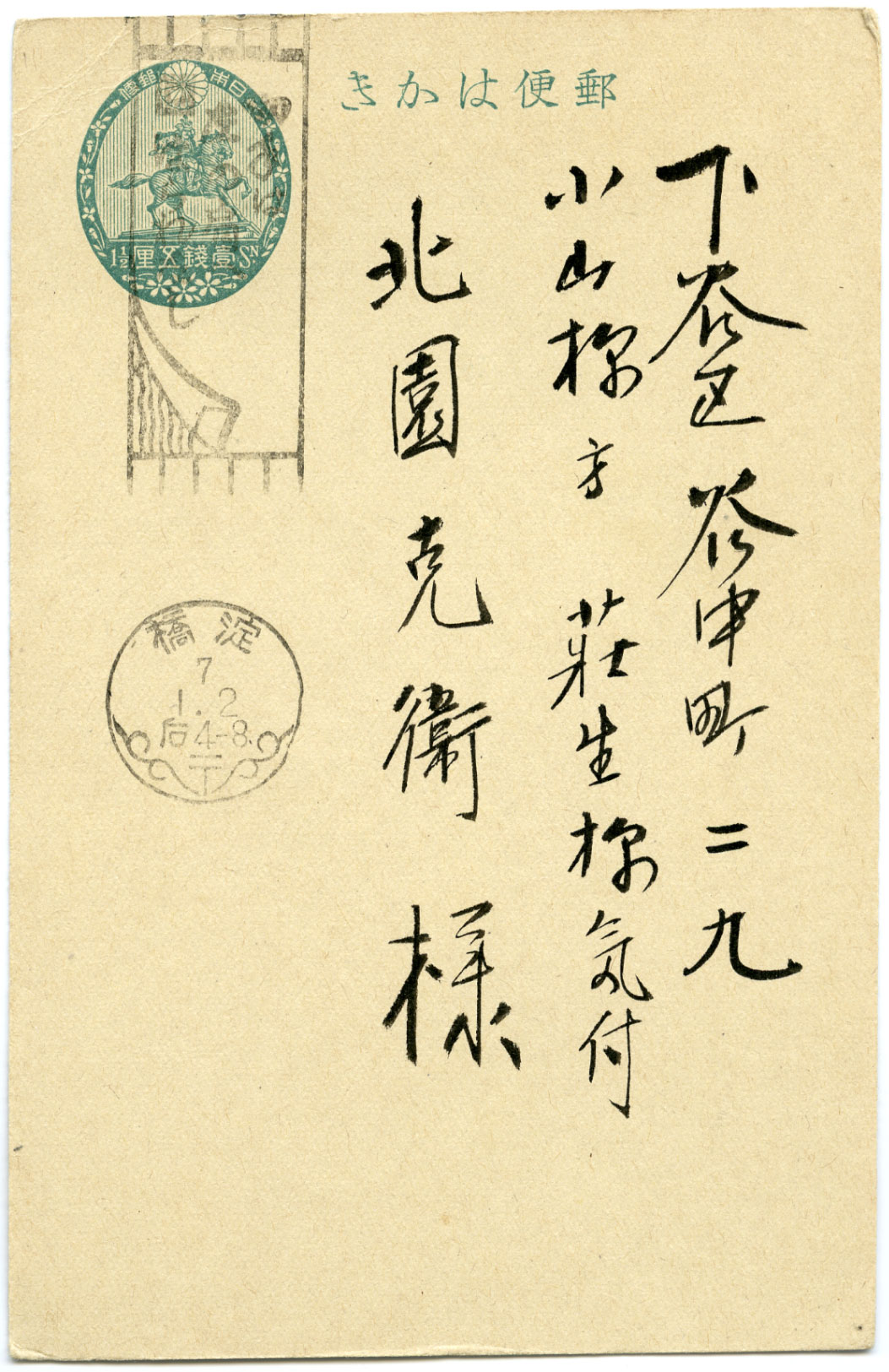
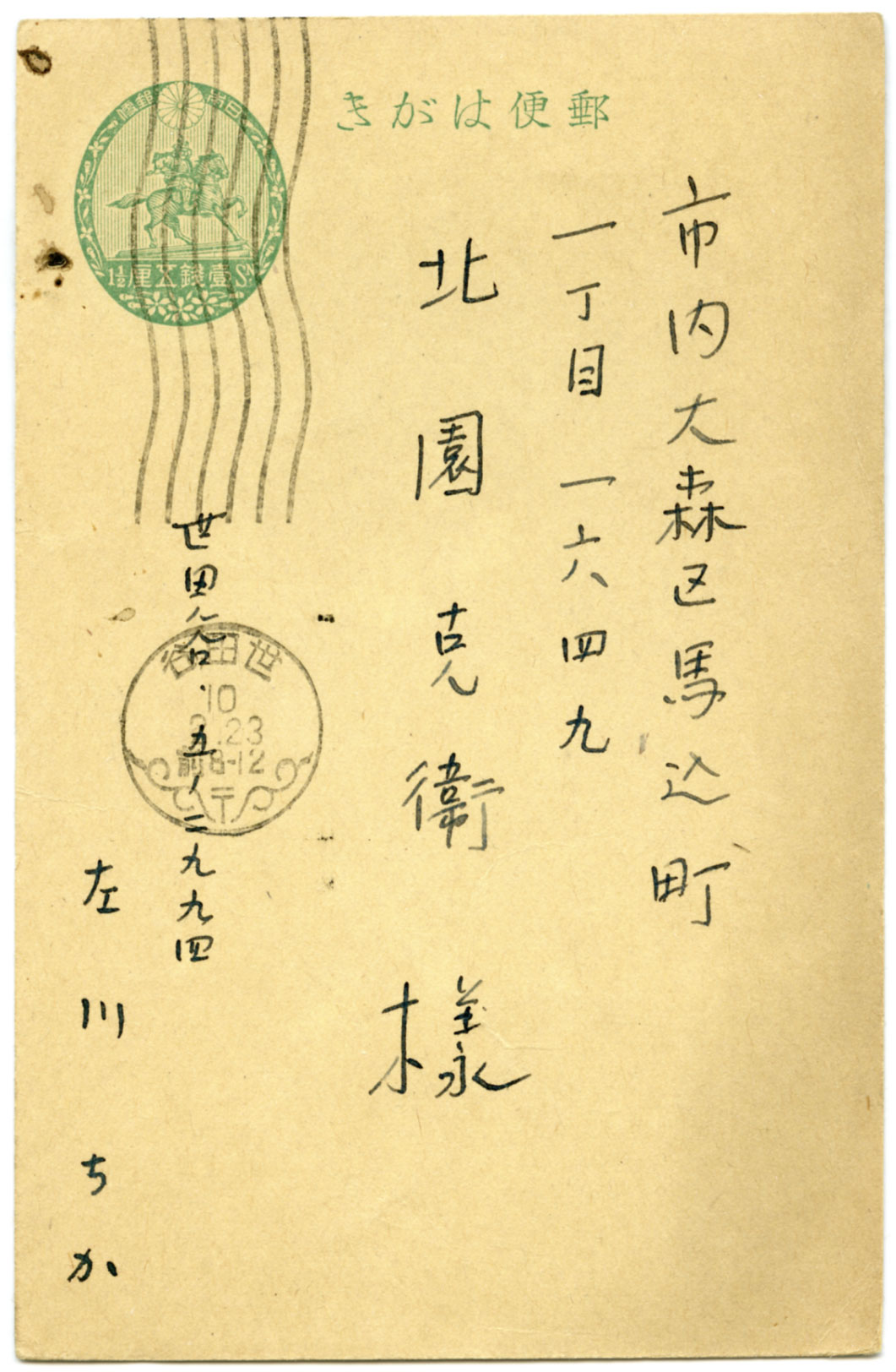
Ema Shoko and My Radiant Dreams
Ms. Ema is a cheerful and energetic lady who always seems to be having a good time. All the more so when we meet up in Ginza – the reds and yellows of her clothes reflect the brilliant colors of the city in the background, making Ms. Ema all the more beautiful. Walking with her, I often catch her singing lightly or keeping time with her fingers. It appears as if she enjoys a special music being played somewhere, that she alone can distinguish out of the cacophony of the city – I believe that she alone gets it, and that I do not. She seems to stroll around Ginza quite a bit. I feel more comfortable in my dark village at night, with the toads croaking and the owls hooting, whereas Ms. Ema in Ginza is like — this: Oh I often see Jo-san from Bungeihanronsha, I saw Kitasono-san – walking around without a hat, I saw Gyo-san, he was so tan he looked black, probably because he plays tennis, I saw Komatsu Kiyoshi-san twice in one day, and then we had tea at Columbin, and Komatsu-san said, “Ema-san you must have gotten married,” and when I asked why, he said “because you’ve lost weight,” and that irritated me so I told him that I would indeed report to him when I got married, I think he must have been drunk, that Komatsu-san – and as she goes on like that, this season in Ginza opens up wide like a parasol ––– I’m imagining these streets where you can get a pot of flowers for a ten-sen coin; or stores with tanks of tropical fish; or the lively ways of acquaintances who I greet with a smile even though I haven’t made the effort to see them in a while – and it all makes me want to run away from this dark village that seems to harbor ghosts, get rustled by the rumbling train and then spit out right in the middle of Ginza. The Ginza that Ms. Ema speaks of is a beautiful, musical city with a fast beat, in strange contrast to the hot and shadeless Ginza that I sometimes find myself trudging through.
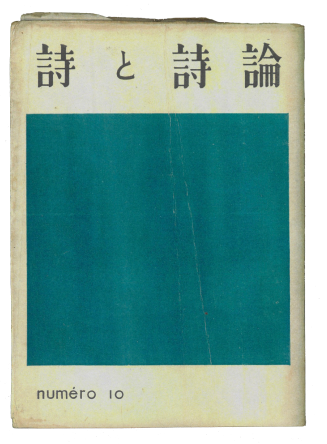
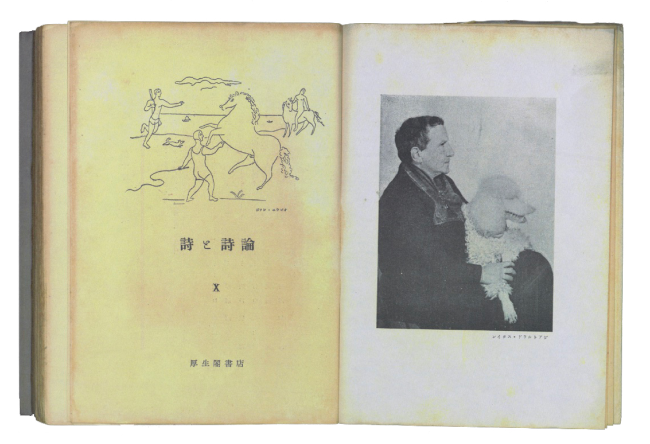
Ema Shōko and Sagawa Chika
Ema Shōko was a long-lived poet who might be called, along with Sagawa Chika, one of the nearly forgotten women modernist poets of Japan. (Her participation in modernism did not win the same level of attention as that of male modernists, nor as much as the women writing in traditional modes.) Still, Ema and Sagawa moved more or less in the same circles, published in many of the same journals and knew many of the same poets. They wandered the city together, though their reactions to it differed. Reading about them one has a sense of their distinct characters, different moods and styles of being, though they shared a mutual appreciation.
Sagawa, for her part, described her friend Ema with images of brightness and good cheer—admiring how “at any moment she seemed about to bounce with her abundant health” that when near her Sagawa too felt that energy spread into her body and voice. When you were with Ema, she seemed to enjoy listening to a special music coming out of the city’s noises that she alone could hear.
Chika Sagawa and Ito Sei
When Chika Sagawa = Ai Kawasaki (1911-36) started out as a translator and poet, her brothers Noboru Kawasaki (1904-87) and Osamu Ito (1905-69) were the first to influence her. Ai had no father and her family was poor. After living away from her family in Honbetsu, Ai returned to her hometown of Yoichi in 1923, when she was 12 years old. Noboru was a literary young man who published poetry in doujinshi. The girl read the doujinshi so much that she memorized it. Sei Ito, who lives in Shionoya Village next to Yoichi, was my brother’s literary companion.
Noboru was the first to recognize Sei, who was still nothing, as a poet. Noboru was Sei’s only friend. The two, who are bound by a bromance bond, aspire to a literary career in Tokyo. However, Noboru failed without showing his talent. Sei sets his sights on the talent of his friend’s younger sister. While Ai admires Noboru, who has a different father, she also admires Sei like an older brother.
Selected Tributes to Sagawa Chika
Lorem ipsum dolor sit amet, consectetur adipiscing elit. Mauris vestibulum turpis eu erat tempor mattis. Nullam accumsan magna turpis, eu fermentum nisl fermentum vel. Proin congue dictum purus, a fringilla ante sollicitudin quis. Nunc vel rhoncus urna, ac vestibulum tellus. In sollicitudin pellentesque nunc. Nunc egestas eget purus vel maximus. Curabitur dapibus mattis lacus eu congue. Integer rutrum tempus cursus. Nulla hendrerit arcu sit amet ante bibendum, non lobortis sapien eleifend. Vivamus consectetur commodo ex et venenatis. Donec sit amet erat sit amet turpis lobortis lacinia non quis nibh. Nullam fringilla nisi vitae fringilla varius.
Ut sit amet metus fringilla augue pulvinar blandit. Nam et dolor urna. Sed quis eleifend ipsum. Sed pretium eu arcu tempor dapibus. Nunc suscipit consequat ante vel vulputate. Donec eu tellus rutrum lorem feugiat vestibulum eget eu sem. Praesent sem leo, mattis ac augue et, sodales sodales ipsum. Maecenas ut pellentesque ex, at eleifend felis. Morbi dictum eu justo sit amet vehicula. Cras convallis, ipsum et venenatis placerat, est nulla viverra elit, ut fermentum enim libero nec enim.